

A diamond tennis bracelet is one of those rare jewelry pieces that can look equally appropriate with everyday clothing, workwear, wedding attire, or an evening dress. Its simple line of diamonds gives it a timeless appearance, while different carat weights, metals, diamond shapes, and settings can completely change how it looks on the wrist.
But choosing the right tennis bracelet involves more than finding the design with the most sparkle. Diamond quality, total carat weight, bracelet length, setting style, metal, clasp construction, and your budget should all be considered before buying.
This guide explains what to look for when choosing a diamond tennis bracelet and how to find the right balance between appearance, comfort, quality, and value.
What Is a Diamond Tennis Bracelet?
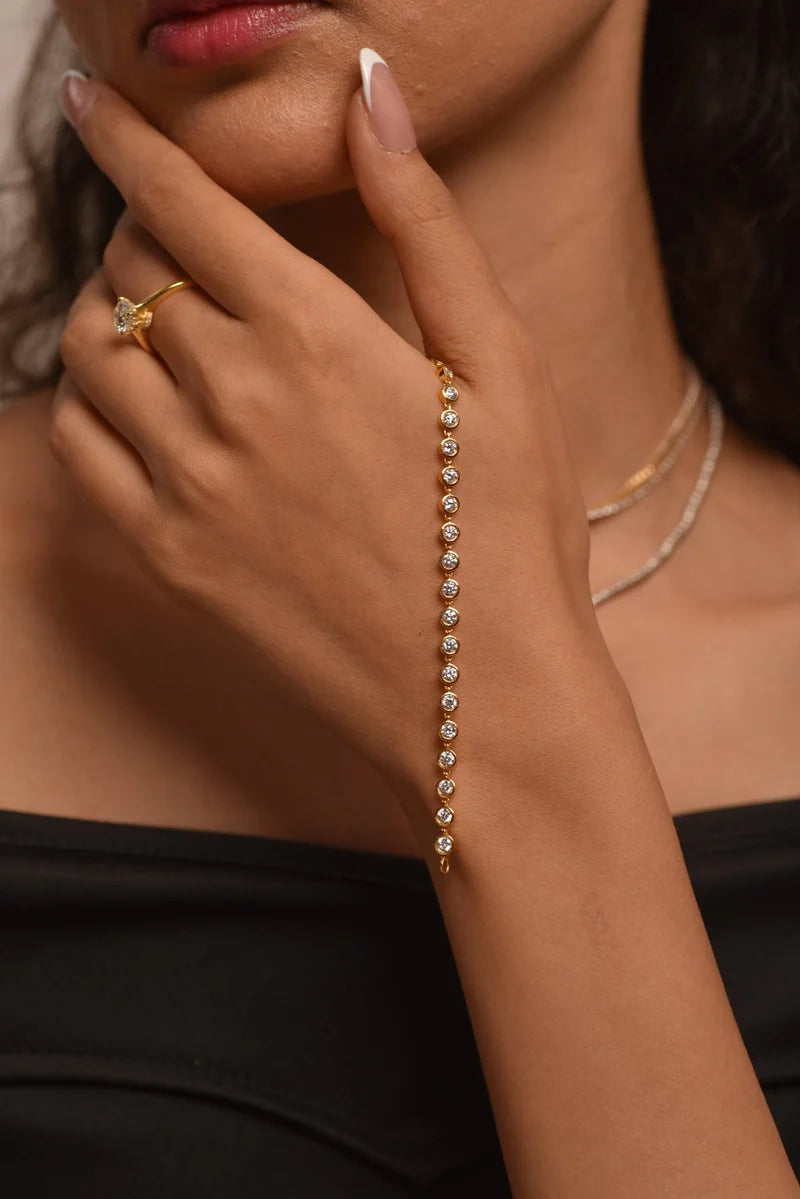
A diamond tennis bracelet is a flexible bracelet featuring a continuous line of individually set diamonds around the wrist.
Round brilliant diamonds are the traditional choice, although modern tennis bracelets can also feature emerald, oval, princess, pear, marquise, radiant, cushion, and other diamond shapes.
The diamonds are generally set close together so that the bracelet creates an uninterrupted line of brilliance.
Unlike rigid bangles, tennis bracelets are made with articulated links that allow the bracelet to move naturally with the wrist. This flexibility is one reason the design works so well for both everyday wear and special occasions.
You can compare different designs in Evara Jewelry's diamond tennis bracelet collection.
What Does a Diamond Tennis Bracelet Symbolize?
The continuous line of diamonds has made tennis bracelets a popular symbol of lasting love, commitment, and connection.
That makes them suitable for anniversaries, birthdays, weddings, graduations, milestone celebrations, or simply as a meaningful personal purchase.
Unlike jewelry associated with one specific occasion, however, a tennis bracelet does not need to have a romantic meaning. Its versatility also makes it an easy piece to buy for yourself and wear regularly.
Why Is It Called a Tennis Bracelet?
The name became popular after tennis champion Chris Evert’s diamond bracelet came off during a U.S. Open match and play was paused while it was recovered. The incident helped turn the classic diamond line bracelet into what we now call a tennis bracelet.
For the full story and history behind the name, read our guide on why it is called a tennis bracelet.
How to Choose a Diamond Tennis Bracelet
A good tennis bracelet should look beautiful, move comfortably around the wrist, and keep its diamonds secure. Before buying, consider the following factors.
Choose the Right Total Carat Weight
With a tennis bracelet, carat weight normally refers to the total carat weight of all the diamonds in the bracelet, rather than the weight of one individual diamond.
A lower total carat weight creates a finer, more understated appearance. Higher carat weights use larger diamonds and create a more noticeable line of sparkle.
For example:
- Around 1 - 2 carats creates a delicate everyday look.
- Around 3 - 4 carats offers more visible sparkle while remaining versatile.
- 5 carats and above creates a stronger statement on the wrist.
There is no single "best" carat weight. Consider your wrist size, budget, personal style, and whether you plan to wear the bracelet alone or stack it with other jewelry.
For a delicate example, see Evara's 1.72 carat diamond tennis bracelet. For greater presence, a 3 carat diamond tennis bracelet provides a noticeably bolder look.

Look at Diamond Quality
Diamond quality is commonly evaluated using the 4Cs: cut, color, clarity, and carat weight. The Gemological Institute of America developed the system and has become the international standard for describing diamonds.
For tennis bracelets, visual consistency is particularly important because many diamonds appear next to one another.
Cut
Cut has a major effect on how effectively a diamond reflects light. Well-cut diamonds generally produce better brilliance and sparkle.
Color
Diamonds should appear reasonably consistent in color across the bracelet. A noticeable difference between neighboring stones can interrupt the uniform appearance of the design.
Clarity
Because individual diamonds in most tennis bracelets are relatively small, extremely high clarity grades are not always necessary for a beautiful appearance.
What matters most visually is that obvious inclusions do not distract from the bracelet when viewed normally.
Carat Weight
Remember that total carat weight is distributed across all the diamonds. Two bracelets with the same total carat weight may still look different depending on bracelet length, number of diamonds, stone size, and setting.
You can read more about the 4Cs of diamonds.
Natural vs. Lab-Grown Diamond Tennis Bracelets
Both natural and lab-grown diamonds can be used in tennis bracelets.
Natural diamonds form naturally within the earth, while lab-grown diamonds are produced in controlled laboratory environments.
Both are diamonds, but their origins and market pricing differ.
A lab-grown diamond tennis bracelet can be especially attractive for shoppers prioritizing larger total carat weight within a particular budget. Natural diamonds may appeal more to shoppers who specifically prefer naturally formed stones.
The better choice depends on your preferences rather than appearance alone.
Learn more about lab-grown diamonds at Evara Jewelry.
Choose the Right Metal
The metal influences the bracelet's color, durability, appearance, and price.
White Gold
White gold creates a bright, coordinated appearance with colorless diamonds and remains one of the most classic combinations.
Yellow Gold
Yellow gold provides stronger contrast between the diamonds and metal, giving the bracelet a warmer, more traditional fine-jewelry look.
Rose Gold
Rose gold adds warmth and a softer pink tone that works particularly well if you already wear rose-gold jewelry.
14K vs. 18K Gold
14K gold contains a lower proportion of pure gold and is generally harder, which makes it practical for jewelry worn frequently.
18K gold contains more pure gold, giving it a richer gold appearance while being slightly softer.
Choose based on your existing jewelry, preferred color, lifestyle, and budget rather than relying only on skin-tone rules.
Pick the Right Diamond Setting
The setting affects both appearance and security.
Prong Setting
Small prongs hold each diamond in place while leaving much of the stone exposed. This creates a classic tennis bracelet appearance with plenty of visible diamond surface.
Three-prong and four-prong designs are both commonly used.
Bezel Setting
A bezel surrounds the diamond with metal. It creates a smooth, contemporary appearance while providing additional protection around the edges of the stones.
See Evara's 4 carat bezel-set diamond tennis bracelet for an example.
Channel Setting
Diamonds sit between parallel rows of metal rather than being individually surrounded by prongs. This produces a smooth, streamlined appearance.
Half-Bezel Setting
A half bezel holds each diamond with metal on two sides, combining some of the protection of a bezel with more visible diamond surface.

1.72 Carat 14K Gold Dainty Diamond Tennis Bracelet

1.70 Carats Three Prongs Dainty Diamond Tennis Bracelet

Natural Pink Sapphire Channel Set Half Bezel Bracelet: Princess cut Tennis Bracelet

4 Carat Bezel Set Round Cut Diamond Gold Minimalist Tennis Bracelet

3.18 Carats Natural Rainbow Sapphire Tennis Bracelet in 14K/18K White Gold

5 Carat Bezel Set Emerald Cut Luxury Diamond Tennis Bracelet

Natural Emerald & Diamond Alternate Tennis Bracelet in 14K/18K Gold

15 Carats Bezel Set Natural Ruby & Lab Grown Diamond Tennis Bracelet
Find Your Correct Tennis Bracelet Size
A tennis bracelet should have enough room to move slightly without sliding too far down your hand.
To measure your wrist:
Wrap a flexible measuring tape around the wrist where you plan to wear the bracelet.
Note the wrist measurement.
Add approximately 0.25 - 0.50 inches depending on how fitted or relaxed you want the bracelet to feel.
A bracelet that is too tight may feel uncomfortable and place unnecessary pressure on the links. An excessively loose bracelet can move around too much and may be more likely to catch on clothing or objects.
Always check the available bracelet lengths before ordering rather than assuming one standard size fits every wrist.
Check the Clasp and Construction
Diamond quality gets most of the attention, but construction matters just as much for a piece that moves continuously around the wrist.
Look for secure links, smooth articulation between each diamond setting, and a dependable clasp.
Box clasps, fold-over mechanisms, and additional safety features are commonly used on fine tennis bracelets.
The bracelet should move naturally without links feeling stiff, twisting excessively, or catching against the skin.
What Diamond Shape Is Best for a Tennis Bracelet?
Round brilliant diamonds remain the classic choice because their shape works naturally in a continuous line and produces strong sparkle.
However, modern tennis bracelets are available with:
- Emerald-cut diamonds
- Princess-cut diamonds
- Oval diamonds
- Pear-shaped diamonds
- Marquise diamonds
- Radiant-cut diamonds
- Cushion-cut diamonds
- Asscher-cut diamonds
Round diamonds usually create the most traditional appearance, while fancy-shaped diamonds can give the bracelet a more distinctive or contemporary look.
How Much Does a Diamond Tennis Bracelet Cost?
There is no single price for a diamond tennis bracelet.
Cost depends primarily on:
- Total diamond carat weight
- Natural or lab-grown diamonds
- Diamond cut, color, and clarity
- Gold purity or platinum
- Bracelet length
- Setting style
- Craftsmanship and construction
Rather than comparing bracelets based only on total carat weight, compare the complete specifications.
A lower-priced bracelet is not necessarily poor quality, and the most expensive option is not automatically the right choice for you.
The goal should be to find a bracelet that balances diamond appearance, craftsmanship, security, comfort, and budget.
Can You Wear a Diamond Tennis Bracelet Every Day?
Yes, a well-made tennis bracelet can work beautifully as everyday fine jewelry.
A delicate bracelet can be worn alone for a simple look or combined with a watch, gold bracelet, bangle, or another tennis bracelet for a layered wrist stack.
For regular wear, pay particular attention to the clasp, prongs, links, and fit.
Avoid wearing fine diamond jewelry during activities where it may receive hard knocks or become exposed to chemicals, and periodically check the bracelet for loose stones or damaged settings.
Is a Diamond Tennis Bracelet a Good Investment?
A quality diamond tennis bracelet can remain wearable for many years and may become a meaningful piece that is passed between generations.
However, it should not automatically be treated as a financial investment expected to increase in value.
Resale value depends on factors such as diamond type, quality, precious-metal value, brand, condition, and the resale market.
A better reason to buy a tennis bracelet is its durability, versatility, timeless design, and how often you expect to wear it.
Find Your Diamond Tennis Bracelet
The best diamond tennis bracelet is not necessarily the bracelet with the largest diamonds or highest price.
Look for a design that suits your wrist, lifestyle, preferred metal, diamond type, desired carat weight, and budget.
Whether you want a delicate bracelet for everyday wear or a higher-carat design for greater impact, compare the details before making your decision.
Browse Evara Jewelry's diamond tennis bracelets or view the complete tennis jewelry collection to compare styles, carat weights, settings, and precious-metal options.
1.72 Carat 14K Gold Dainty Diamond Tennis Bracelet

Peridot Tennis Bracelet in 14K/18K White Gold / August Birthstone Bracelet

Natural Emerald Lab Grown Diamond 50-50 Custom Tennis Bracelet in 14K/18K Gold

Natural Ruby Tennis Bracelet in 14K/18K Gold / July Birthstone Bracelet
3.18 Carats Natural Rainbow Sapphire Tennis Bracelet in 14K/18K White Gold

Natural Emerald Tennis Bracelet in 14K/18K Gold / May Birthstone Bracelet
Natural Emerald & Diamond Alternate Tennis Bracelet in 14K/18K Gold

Custom Natural Ruby & Diamond Tennis Bracelet in 14K/18K Gold